The lower face is one of the most dynamic parts of your appearance. It’s where much of your emotion and character show when you talk, eat, smile, or laugh. And, as you may have noticed when you look in the mirror, it also bears the weight of early aging.
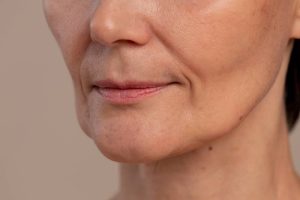
Softening along your jawline, deeper smile lines, early jowling, or downturned corners of the mouth can make you look more tired or older than you feel. Even if the rest of your face still appears smooth and lifted, these changes in the lower face can stand out.
Understanding why this area ages first lets you know what’s happening beneath the surface and what you can do to address it and restore balance.
Why the Lower Face Shows Aging Before Other Areas
The lower face ages quickly because it’s under the influence of gravity and volume shifts happening higher up. As you lose structural support in the midface, the tissue that once sat high on your cheeks gradually moves downward. This descent creates fullness along your jawline while flattening the upper cheeks. You can think of it like a bookshelf. When the top shelf sags, everything below begins to shift out of place.
The jawbone naturally resorbs with age, reducing the projection and width of your jawline. This subtle shrinking reduces support for the surrounding soft tissues, which contributes to early sagging. The chin may also shorten or narrow slightly, which can affect the appearance of your mouth and jawline.
Each of these natural internal changes makes a huge difference in your external contours. A facelift surgery or other cosmetic treatment can help to restore this aging from the inside, not just treating the outer skin.
The Effect of Fat Redistribution on Your Jawline
As you age, your facial fat shifts in both location and volume. In youth, fat pads sit higher in your cheeks. That position gives your face a lifted, heart-shaped appearance. With time, those fat pads move downward, pulling your face with them. This shifting creates the softening or heaviness many people notice in their 30s and 40s.
If you’ve ever felt that weight gain appears first in your neck or jawline but not elsewhere, this redistribution is partly to blame. Even with a healthy lifestyle, genetics determine where your body stores fat. Fat redistribution and weight gain can make your lower face look fuller, even when the rest of your body remains lean.
This is also why early jowling happens. The combination of fat descent, lost support, and subtle laxity creates small pockets of heaviness that disrupt the once-smooth jawline. These changes are structural, not superficial, which is why topical treatments alone rarely fix the issue.
Muscle Movement Doesn’t Always Prevent Aging
You’ve heard it before. A healthy and active lifestyle can help you look younger, so work out all the muscles you can. Well, this doesn’t apply to every area of your body.
The lower face works harder than almost any other part of your face. Each time you speak or chew, you engage the muscles around your mouth and jaw. Even activities like clenching or grinding your teeth affect your jawline structure over time.
Over years of repeated motion and as your skin loses elasticity, these expressions can etch in and deepen lines like the nasolabial folds or marionette lines.
This doesn’t mean you’re doing anything wrong. It’s a natural process, just like all the other internal changes that occur. Shifting tissues and bone changes, combined with muscle movement, create aging that often feels more dramatic or sudden than upper-face aging.
What Now?
The mismatch between the wrinkles on your upper face versus your lower face can make you feel unbalanced. You might feel like you don’t even look like yourself anymore. So what do you do? Because so many of the contributing factors occur on an under-the-surface level, makeup and skincare just don’t cut it.
Now that you understand why the lower face ages first, you can select treatments that effectively address each layer of the face. Aging in this area involves changes to the bones, fat, skin, and muscles. As a result, solutions that target only one layer can only do so much. The most effective options support multiple structures while still maintaining your natural appearance.
Solutions That Address Lower-Face Aging at the Source
Natural-looking dermal fillers can improve proportion and support by restoring volume in strategic areas, such as the chin or jawline. Adding structure through facial fillers can help lift adjacent tissues, softening the appearance of jowling and folds. Neuromodulators can help reduce the downward pull from overactive muscles, resulting in a more relaxed expression. When used carefully in the lower face, both of these treatments maintain natural movement while providing a refreshing lift.
Energy-based skin tightening treatments, like facetites, stimulate collagen. These treatments can offer gradual improvement in the lower cheeks and jawline. If you have mild laxity or want early maintenance, look for a facetite near you.
But if you have more noticeable sagging, consider surgical options. A surgical lift addresses the root cause by restoring deeper support on the muscular and deep-tissue level. One of these surgeries, like a lower facelift, yields a longer-lasting and more dramatic result.
Each option works differently depending on your anatomy and goals. Do you want to look significantly younger, or do you just want your aging to look more balanced? Choose an approach that aligns with your needs. When you do, you can create results that feel refreshed and true to your natural features.
Age Confidently
Your lower face may be the area with the most dramatic aging, but it’s also an area with multiple effective solutions. The best cosmetic procedures don’t try to fight aging. That’s a losing battle. Instead, the good ones work with aging.
Don’t let the aging of your face weigh your mind down. Let it give you confidence and make you feel vibrant. Select a treatment that addresses the deeper causes, not just the surface effects, for natural-looking improvements that last.
Your lower face doesn’t have to define how you age. Your knowledge and choices can.
Infographic
The lower face is constantly in motion as we speak, smile, and eat, making it especially prone to early aging. Learn six essential facts about how the lower face changes over time in this infographic.