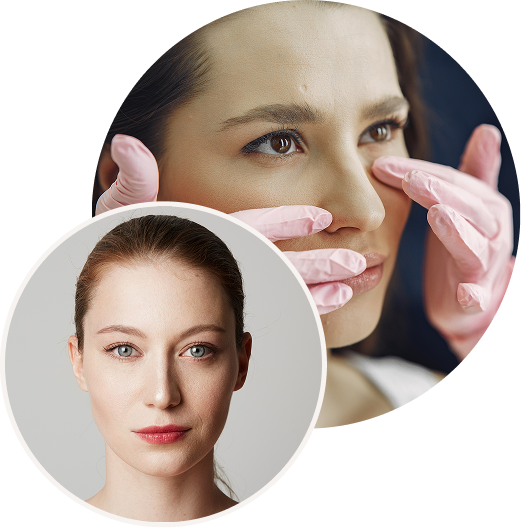
Whether it’s sagging skin or wrinkles, the eyes are often one of the first features to show signs of aging. The skin around your eyes is delicate. As a result, it can usually age faster than other areas of your face, making you look older and more tired. One solution to rejuvenate a tired face is blepharoplasty, or eyelid surgery.
But when considering this procedure, you should understand the differences between upper and lower blepharoplasty. Sometimes you benefit more from one than the other. Sometimes you might benefit from both. Or, for a more comprehensive transformation, you may want to consider adding mid-face work.
No two faces are the same, so it’s essential to customize the treatment plan for any facial plastic surgery to achieve your desired results. Let’s break down some of the ways to determine which customizations are right for you.
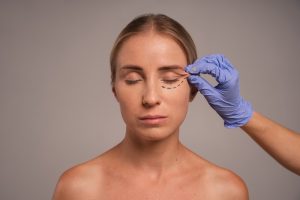
What is Upper Blepharoplasty?
Upper blepharoplasty, as the name implies, focuses on the upper eyelids. There, excess skin or fat may cause drooping or a tired appearance. Noticeable sagging in the upper eyelid can sometimes also obstruct vision.
During upper blepharoplasty, the surgeon removes excess skin from the upper eyelids and tightens the area.
This process can help you look more alert, open, refreshed, and youthful by reducing the heavy, fatigued look that often accompanies aging or genetics. It’s a highly effective procedure that restores a natural contour to the upper eyelid, allowing your eyes to appear brighter and younger.
What is Lower Blepharoplasty?
Lower blepharoplasty primarily focuses on addressing the bags and wrinkles below the eyes. A combination of excess fat, loss of skin elasticity, or muscle laxity can cause those.
If one or more of these issues affects you, your lower eyelids might be puffy or have a hollowed-out look. Even if you’re well-rested, you may still look perpetually worn out.
During the procedure, the surgeon removes or repositions excess fat to reduce puffiness and contour the face. They may also tighten the skin to smooth out wrinkles. This surgery can dramatically change your eyes, making you look less tired and more rejuvenated. Lower blepharoplasty can also correct the hollow or sunken look beneath the eyes, restoring volume and balance to the lower eyelid region.
When to Choose Upper or Lower Blepharoplasty (or Both)
The decision to undergo upper, lower, or both procedures depends on your specific concerns and the overall aesthetic changes you’re hoping to achieve. If you’re primarily concerned with drooping or excess skin on your upper eyelids, upper blepharoplasty alone may be the right choice.
On the other hand, your lower eyelids might show more prominent puffiness or wrinkling, or you might have prominent dark circles or bags. In that case, lower blepharoplasty may be the best option.
However, many patients experience issues in both the upper and lower eyelids. You may want to opt for both upper and lower blepharoplasty to achieve a more harmonious and balanced result. This combined approach can create an overall more youthful, refreshed appearance by addressing the entire eye area.
Is Mid-Face Surgery A Good Choice for You?
While upper and lower blepharoplasty are focused specifically on the eyes, the mid-face area plays a crucial role in the overall facial appearance. The mid-face includes the cheek area, under-eye region, and nasolabial folds (the lines that run from the nose to the corners of the mouth).
As you age, the skin and fat in this region can sag or lose volume, resulting in hollow cheeks and a general lack of contour. A mid-facelift addresses this volume loss and improves the transition between the lower eyelids and the cheeks.
If you’re planning to undergo blepharoplasty and find that your mid-face is also showing signs of aging, consider adding mid-face work. It could be the ideal way to get the most out of your surgery.
The Benefits of Combining Procedures
When you undergo both blepharoplasties and mid-face work all at once, you can address multiple concerns in a single surgery. That lets you achieve a more balanced, harmonious look without undergoing separate surgeries months apart.
This method can help you avoid the “pieced-together” look that sometimes results from treating only one area at a time. Both surgeries allow you to create a youthful, refreshed appearance that flows naturally and seamlessly across the entire face, restoring facial balance.
How to Decide
Altogether, there are three different surgeries you can mix and match according to your needs. That’s a lot of freedom, but also a lot of pressure. How do you know what to choose?
Well, as we discussed above, the decision between lower, upper, or both forms of blepharoplasty depends on your primary concerns. Are your eyebags your only worry? What about drooping lids? What about both? Could the rest of your face use rejuvenation? Would you rather do it all at once?
Once you’ve come to a general decision, consult your surgeon. They can examine your unique features and recommend the most effective approach for you based on your goals.
You should also keep in mind that multiple procedures may extend recovery time. Another reason to consult your surgeon is to get an estimate of that time so you can plan accordingly.
Choose For Yourself
In the end, the most important deciding factor is yourself. You undergo facial procedures to restore your confidence, not for anyone or anything else. Let that be your guide as you choose what map to follow for your cosmetic journey.
Create a personalized plan to help you look and feel your best. Find a skilled, careful surgeon that you can trust to help bring your plans to life and create the cosmetic refreshment you dream of.